


Parents often talk about autism. So do professionals and researchers. But some things are hard to truly understand without listening to autistic people themselves.
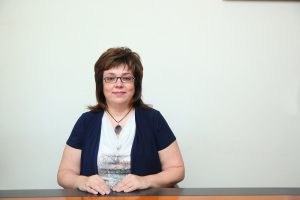
Michael Sergiyenko knows autism from the inside. At the same time he is learning to look at it through science. He studies Biomedical Sciences with a focus on neuroscience at the University of Edinburgh. He also volunteers with the “Child with Future” NGO. Recently he hosted a series of webinars called “Autistic Person Speaks”.
For Michael this was his first experience working directly with parents and professionals. For the audience it was a chance to ask questions directly to an autistic person.
We spoke with Michael about what both sides can learn from this dialogue. We also discussed why personal experience of autism is not always enough. He talked about the responsibility that comes with giving advice. We also asked how science is slowly shaping the work he wants to continue.
Michael, you study Biomedical Sciences with a focus on neuroscience at the University of Edinburgh. You also volunteer with the “Child with Future” NGO and recently hosted the “Autistic Person Speaks” webinar series. How do you see your role in this work based on your education and your own experience of autism?
My role in the webinar series is to raise awareness about autism and give parents more information. It is important to me that I can talk about more than what I study at university. I can also talk about my own experience of living with autism.
This gives me a chance to explain some things from two perspectives. I can look at how science describes certain processes. I can also talk about how they may actually feel to an autistic person.
I think this can be especially useful for parents. A child’s behaviour is not always easy to understand from the outside. Sometimes it may look like the child does not want to do something. Their reaction may seem strange or their behaviour may look problematic. But for the autistic person there may be a completely different reason behind it.
This is where I can explain how some situations may feel from the inside. Maybe this can help parents look at their child’s behaviour in a different way. It can help them think about what may be behind that behaviour.
At the same time I always remember one important thing. My experience is not the experience of every autistic person.
It has also been very valuable for me to get experience in this kind of work. Helping parents is a new format for me. I want to learn how to explain difficult things more clearly. I also want to get better at answering questions and understanding what information parents really need.
So this work gives me a chance to share my experience and knowledge. It also gives me a chance to grow. I like that the process works both ways. I can give something to other people but I also learn a lot from their questions.
The “Autistic Person Speaks” webinars have given you a chance to talk directly with parents and professionals. What has been the most interesting or unexpected part of this experience? What do you think worked especially well and what would you like to change after these first meetings?
The most unexpected thing for me was the feeling of responsibility. Before the webinars I do not think I fully understood how strong that feeling would be.
At some point I realised that what I say or recommend can actually affect people’s lives. Parents can hear my answer and trust it. They may then use my advice with their child. That makes you think about every word in a very different way.
It is one thing when you are simply talking about your own experience. You can say: “This is what happened to me. This is how it felt to me.”
But it is very different when people ask specific questions about their children. They are waiting for an answer from you. That brings a completely different level of responsibility.
I realised how careful I need to be with my words and advice. I do not want to say something just because it worked for me. I also do not want people to think I know every answer simply because I am autistic.
So I try to make a clear distinction. Sometimes I talk about my personal experience. In other situations we need broader knowledge. We may need research or the experiences of other autistic people or of experts in their field.
I think the direct communication with parents worked especially well. I found their questions asked during the webinars very interesting because they quickly show what really matters to people in everyday life.
Sometimes you can hear frustration behind a question. Sometimes a parent does not understand their child’s behaviour. Sometimes they simply want to know why their child does something in a particular way.
This has also been very valuable for me. These questions make me think. Sometimes they make me admit that I do not know something. Then I can go away and learn more about it.
What did people ask about most often during the webinars? Were there any questions that surprised you or made you look at a familiar subject differently? Were there questions that made you want to do more research? And which questions were the hardest to answer?
There was no single main topic. People asked about many different aspects of autism. That was actually one of the most interesting things for me.
Two questions may seem to be about the same topic. But there can be completely different situations behind them.
A lot depends on the person. Their age and individual needs matter. The way they communicate also matters. Another important factor is how much support they need.
The webinars made me see even more clearly how broad and diverse the autism spectrum really is.
I was especially interested in the topic of autistic people who need a lot of support. I realised that I want to learn much more about their experiences.
I am autistic myself. But that does not mean I automatically know what every other autistic person feels or needs. My own experience has limits. It is important for me to recognise those limits.
I do not want to think that I can explain everyone else’s experience just because I have experienced something myself.
Things that work for autistic people with lower support needs may not work in the same way for people who need much more support. Sometimes they may work but require much more time and repetition. They may also require much more effort.
Sometimes it is harder to see progress. Progress may be slower. It may also look completely different from what adults expect.
I think this is very important for parents. They should not miss progress simply because it does not look the way they imagined it would.
These are also the questions that are hardest for me to answer. I do not want to give confident advice just because someone expects an answer from me.
If I do not have experience in a particular area then I would rather admit that I need to learn more. I can then read the research and learn from other people’s experiences. After that I can try to understand the subject better.
The webinars showed me what I can already talk about with confidence. They also showed me what I still do not know.
In some ways that is even more interesting to me. Now I have specific questions that I want to explore further.
You talk about autism from two perspectives. You are an autistic person and a future scientist who studies neuroscience. How easy is it to combine these two perspectives? Does your personal experience ever differ from what science describes? Does scientific knowledge help you understand your own experience in a new way?
So far I have not directly used neuroscience when giving advice during the webinars. For me these are still two different things.
This is my personal experience as an autistic person. Then there is what I study at university.
It is important for me not to mix them together just because they are both connected to autism. I do not think you can simply take knowledge from neuroscience and tell parents what they should do with their child.
You cannot just say: “This is how your child’s brain works. So this is exactly what you need to do.”
The reality is much more complicated.
But I can already see how understanding biology helps me work with information. It is easier for me to read relevant research papers. I can understand what the researchers were studying and how they got their results.
Most importantly I can think about what we can actually conclude from those results.
I find this interesting because I do not have to simply read a conclusion about autism and accept it. I can try to understand where that conclusion came from.
I also enjoy the process itself. You are not just looking for a ready-made answer. You are trying to understand what evidence the answer is based on.
So for now these two perspectives mostly complement each other. I do not try to force them together.
My own experience allows me to say: “I know how some things can feel from the inside because I have experienced them myself.”
My education is gradually giving me another tool. It allows me to look at the same question from a scientific perspective. I can check the information and understand it more deeply.
A webinar takes much more than the time you spend in front of the camera. It also requires serious preparation. What does this process look like for you? How do you manage it while living in Kyiv with air raid alerts and attacks? What helps you stay focused and continue this work?
Working on the webinars was tiring for me over the long term. The webinar itself only takes a few hours on a particular day. But the actual work starts much earlier.
During the week I had to find time to plan the content. I also had to work with information and deal with organisational tasks. Then I needed to prepare the presentation before finally doing the webinar itself.
So it was never a case of sitting down one day and doing a webinar. The webinar was basically with me for the whole week.
Of course air raid alerts and attacks made this much harder. Sleep was especially difficult.
Sometimes you wake up several times during the night because of an air raid alert. Sometimes you simply sleep badly. Nobody gives you those hours or that energy back the next day.
But you still need to read and think. You still need to prepare the material and work on the presentation. You can do it but you can feel that you have less energy.
When this happens for several days the tiredness slowly builds up.
For me the hardest part was not actually doing the webinar. Once it started I knew why I was there and what I wanted to talk about.
The harder part was combining the preparation with my studies and normal life. There is also the reality we are living in now.
You cannot always plan to sleep well tonight and be productive tomorrow. It does not always depend on you.
It really helped that I did not try to prepare everything in one day. This was important for me.
I divided the work into separate parts. I planned the content first. Then I worked with the information. After that I prepared the presentation.
The support of people close to me also helped a lot. Having time for my hobbies was just as important. I also needed time to simply rest.
I did not want to give all of that up for the webinars. I understood that if I kept taking energy away from myself then eventually there would be nothing left.
At that point it would not matter how well I had planned everything.
Do you plan to expand your work with the “Child with Future” NGO? If so then what might that look like? What would you most like to talk about with your audience today?
Right now I do not have an exact answer about the format. I am not sure I even want to have one yet.
I am interested in trying different things and seeing where I can be most useful. But I definitely plan to continue working with the “Child with Future” NGO. I also want to gradually expand what I do.
I would like to develop my work as a consultant. I want to continue giving lectures and talking more with parents and professionals. I would also like to help organise events for “Child with Future”.
Parents and professionals can already contact me for a free consultation. They can do this by messaging my mother Inna Sergiyenko on Facebook. She is the founder of the “Child with Future” NGO.
This is quite an important step for me because a webinar and a personal consultation are very different things.
During a webinar you are speaking to many people at once. In a consultation you can hear one person’s specific story. You can listen to a particular question and try to understand that situation.
I think this experience will also help me understand the real problems that parents and professionals face in everyday life.
The webinars gave me my first serious experience of this kind of work. They also showed me quite clearly where I still need more knowledge.
I like that because I do not want to prepare a certain amount of information about autism once and then keep repeating it forever. If I continue doing this work then I want to keep developing alongside it.
That is why I do not want to limit myself to one format right now. It could be lectures or consultations. It could also be something completely different.
What matters is finding a format that is useful for parents and for the organisation.
As for topics I would like to talk more about areas where we can combine autistic people’s own experiences with practical information for parents.
At the same time the webinars showed me that I need to keep learning. In particular I want to understand much more about autistic people with high support needs.