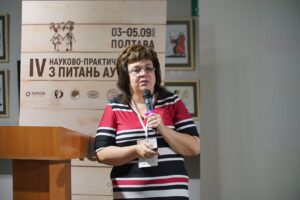



When the war changed the lives of every Ukrainian family, an unprecedented responsibility fell on the shoulders of parents and educators. Places where a child can not only be safe, but also have the opportunity to fully develop, receive support, and feel cared became especially valuable. In November 2025, the Kyiv full-day kindergarten for children with special needs, “Child with Future,” marked a milestone—15 years of work.
On the eve of the new year, 2026, we decided to have an open and honest conversation with its director, Natalia Struchek. We talked about the kindergarten’s results in 2025, the key issues, and the challenges that concern its staff, pupils, and their parents. The conversation turned out to be long, and it was not so much about methods or approaches as it was about people — teachers who fight for every new skill a child gains; parents who are learning to accept and to help; and our children, who are growing and learning in the conditions of brutal Russian aggression.
Ms. Natalia, another difficult year for Ukraine — 2025 — is coming to an end. What were the main challenges it brought to your kindergarten, and how did you cope with them?
War. War is our main challenge, and it affects all Ukrainians literally. And unfortunately, even though it has been going on for more than one year, it still constantly makes adjustments to our lives. Right now, for example, Kyiv is once again experiencing long blackouts… Yes, like all Kyiv residents, we seem to have adapted (we have autonomous electricity, water, and heating), but it is still quite inconvenient, costly, and uncomfortable. People also get exhausted when they spend nights in shelters and don’t have the ability to make even a simple breakfast because there’s no electricity, or to take a hot shower… The fatigue is definitely there, although it would be strange if, in the fourth year of the war, it were any different. Of course, within our team we try to joke, to come up with something to cheer each other up. But I can see how this fatigue keeps building up. And at the same time, I never stop admiring the courage and resilience of all Ukrainians! I honestly don’t know where we all get our strength from — but somehow, we do.
If we talk about more specific issues, this year it has become noticeably more difficult to find staff. Everyone is looking for work that is as independent as possible from circumstances they cannot influence. People don’t want to spend time commuting; they want to work as close to their homes as possible. Living costs in Kyiv have also risen significantly, and people naturally expect higher salaries. I can’t say this is something entirely new, but unfortunately, we more often have to invent new ways to adapt to the realities of our time. Then again, this concerns not only us.
Yes, it’s hard to disagree with that. And how did the work of your teaching and therapy teams change in 2025? New methods, programs… Maybe you had to give something up?
Well, as you know, nothing stands still. And that’s actually encouraging, because it gives a sense of movement and life even in such a difficult time. Despite all the chaos and harsh realities around us, learning in Ukraine is still going on, conferences are still being held, and new initiatives keep appearing that support and develop us. Yes, a lot of this has moved online, but the level of what is being offered is very high.
Since many Ukrainians have been forced to live abroad, the amount of information about international programs and methods that we now work with has increased many times over. Five years ago, I couldn’t even imagine that the exchange of useful information between Ukraine and the EU, and other countries, would be so broad and deep! A lot of very interesting things are coming to us now from the United States, from Finland, and this truly expands our horizons. Unfortunately, most European countries don’t have much to offer specifically for our very narrow field, but there are still valuable practices, and that is extremely important.
As for our developments, we have completely turned our testing system upside down. Everything is now done online. Each child has their own online account with individually designed tests. All specialists working with the child enter their data there, and now we can observe a very precise, almost “live” dynamic of development. There are percentages, charts, and visual materials — everything is as simple and clear as possible for parents, who can log in and check it at any time. And this gives us a huge opportunity to talk honestly, in detail, and in a very human way with parents about difficulties and to adjust the direction of further work together. Before, we did all of this on paper, manually. Now it’s a completely different level: modern, convenient, and alive.
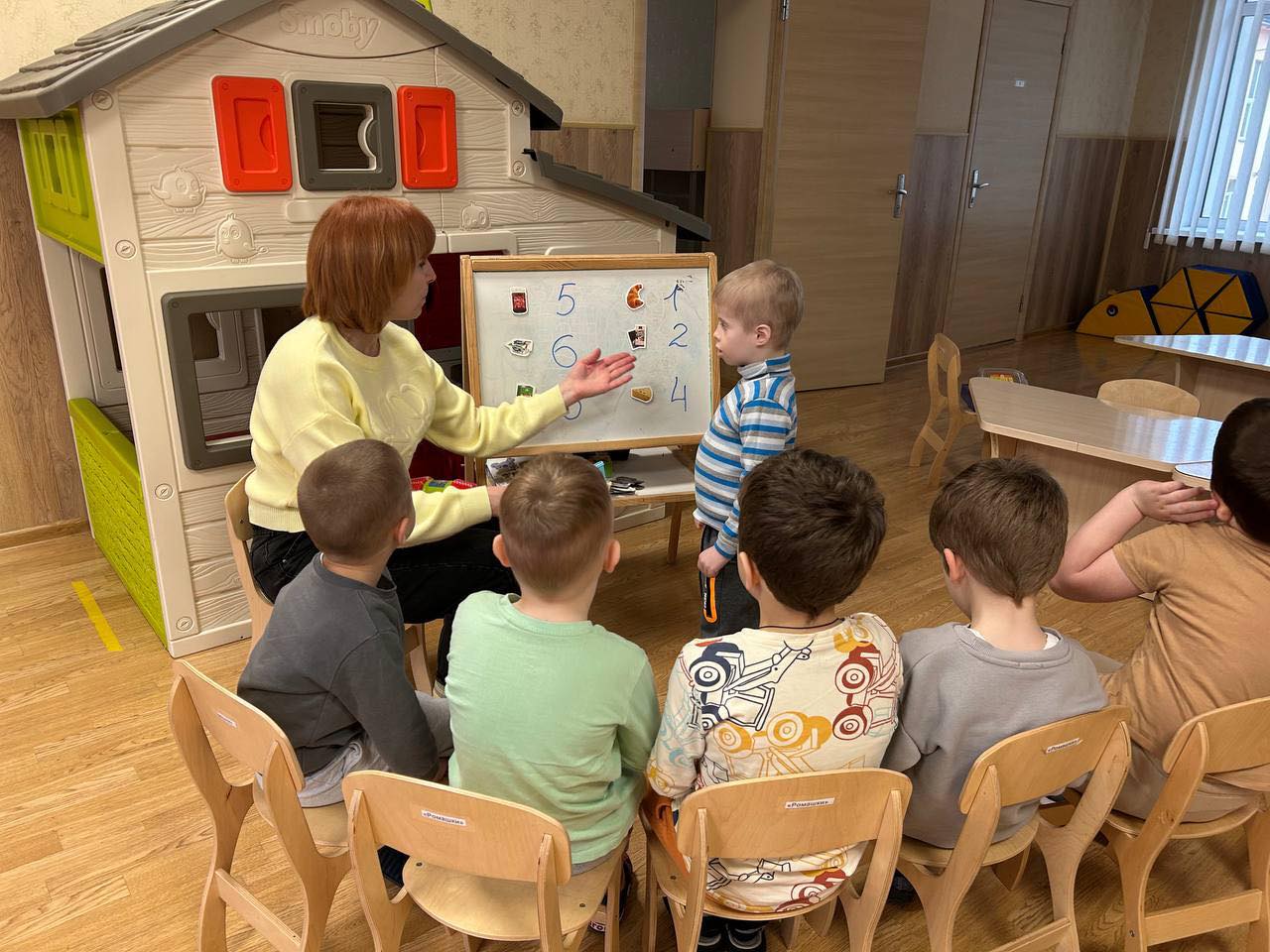
As for methods, neurocorrection is currently at the peak of its relevance. And this is amazing, because before it seemed that it was suitable only for preschool-age children or only for neurotypical kids. Now we see how well it works with different children, with different needs. The key thing is to choose the right exercises. There are situations where a child simply cannot perform certain tasks (and that’s normal), and then we look for alternatives. There are exercises for developing both brain hemispheres, for using both hands, for attention — there is an almost endless resource there. Previously, we used these exercises separately, in a very targeted way, but now they work as a system. And it is exactly this integrated approach that gives a tangible push, helps the child move to new levels of development, as if opening up another step upward for them.
Can we say that, amid all these changes, parents’ expectations of the kindergarten have also changed? And what would you like to especially emphasize in this context?
Let’s start with the first part. The main request from parents remains the same as before: they want their child to start speaking. This is what they most often come to us with, even when the child is still very young. But, as always, we emphasize that the first thing to work on is socialization. Because without it, further development and a child’s life in society are simply impossible. This is the foundation — without it, nothing works.
And it is very important that both parents and even private specialists who work with a child individually clearly understand these priorities. Focusing only on academic skills is not enough. Social skills must come first. A child should not just know something, but be able to transfer that knowledge into everyday life. Because more and more often we see children who come to us after developmental centers or private teachers who seem to have learned a lot, but don’t understand how to use these skills in real life. And this is very obvious: the skills were not practiced in everyday situations. As a result, the child was seemingly busy all this time, but everything remains at the level of “theory at the table.”
It is important for any educator to understand this and to explain it to parents. I know that when parents turn to a private teacher or institution, that specialist usually follows the parents’ request. Parents really want to believe that one or two professionals can solve all the issues. But no, that’s not how it works. An educator must honestly explain: if a child does not practice their skills at home, in daily life, and does not understand how to use what they learned in the therapy room, then unfortunately all those abilities will disappear very quickly. It’s like learning a foreign language: you can study grammar and vocabulary perfectly, but if there is no practice, you will never start speaking.
I always give parents a simple example: sorting objects at a table with a specialist is good, but transferring that skill to sorting socks at home — that’s where the real task is. And for this, a child needs help from an adult, because they won’t build that connection on their own. And without the skill of transfer, the quality of the child’s future life will be extremely low, because all these “learned” abilities will simply hang in the air and never become part of their real life.
One more question about parents. In your opinion, which formats of work within families are the most effective, and which ones should parents avoid so as not to harm the child?
I will never get tired of repeating this: one of the biggest gaps in families is parents’ very low level of awareness about their child’s difficulties. And this is not their fault — it is the result of a diagnostic system that does not work well. One key mistake pulls an entire chain of others behind it. Parents are given a diagnosis — often superficial or vague — and are simply sent to centers, regular kindergartens, or teachers. But no one explains the seriousness of the situation to them. No one speaks honestly and directly about the fact that we are dealing with mental impairments that cannot always be influenced by simple methods — the way parents know from their own experience and the way they want it to be.
For some reason, nowadays almost everyone is being labeled with “ASD.” Because of this, we have a huge amount of confusion. A child with alalia needs one type of intervention; a child with autism needs a completely different one. A child with neurological impairments and a child with ASD are different stories, yet in documents they all end up with the same “ASD.” On top of that, parents are either terribly afraid of this diagnosis or, on the contrary, afraid of any other one. This is especially true when it comes to intellectual disability — the very term causes panic. And then it becomes easier for parents to accept “ASD” than intellectual impairments. But this false “comfort” of a diagnosis is very harmful, because it leads to insufficient correction in working with the child. For example, a child with genetic or syndromic conditions, or with serious neurological issues, needs extremely intensive physical rehabilitation: more massage, more specialized activities, more work with the body, more movement. In kindergarten, we can do this part, but it remains supportive. And for some children, this is critically not enough. Because if physical issues are not properly addressed, mental development simply will not move forward.
And here, in my opinion, the big problem is that doctors do not explain this to parents. But when a doctor says one thing and an educator says something else, parents choose the doctor. We recommend swimming, we recommend activities, we recommend working with the body and movement — but not everyone is ready to accept this. Instead, everyone is chasing speech and goes only to a speech therapist, because they are promised quick results.
Another difficulty is that parents very often relax once they come to us. Sometimes they don’t even attend consultations. They don’t realize that everything that happens with the child goes through them. There are situations where a child behaves wonderfully in kindergarten but completely differently at home — and parents stay silent about it. This is wrong, because it is at home that effort is most needed: talking to the child, paying attention, stimulating them, helping them become interested, forming communication. And not everyone is ready to invest that deeply.
And it is important to be honest here: this is not just “war fatigue.” Unfortunately, very often it is simply an excuse. Because I see the other side as well — families who left at the beginning of the invasion and then returned have become much more involved. They saw how everything works in Europe, and it scared them. Because there, disability is registered immediately, everything is placed on the parents, and no one “fights” for correction. You either work on it yourself, or almost nothing happens. Even now, families come to us whose children were born abroad and have different citizenship, but do not have access to strong correctional institutions like ours. Because there, a child in kindergarten may wear diapers, may be fed with a spoon at seven or eight years old, and this is considered normal. That is, correction turns into simple care — a place to stay. Nothing is demanded from the children; they are serviced, not taught. And that is exactly why such parents, when they return home, most often turn out to be very involved. Because they have already seen what it can look like, and therefore they are much more ready to work with their child, to learn, and to actually follow recommendations.
We know that the kindergarten anniversary was recently celebrated: 15 years of work is a serious milestone. And if I’m not mistaken, the center still remains unique in Ukraine for children with ASD. So please remind our readers what exactly makes “Child with Future” unique and, so to speak, what parents are actually paying for?
For extremely hard work. Truly, sometimes it’s difficult to find any other words, because that is exactly what parents pay for — for enormous daily work that is invisible from the outside but completely transforms a child.
Our children spend ten hours a day at the kindergarten, five days a week, and the work begins from the very first minute. We immediately involve the child in everyday routines: taking off outerwear, going to the bathroom, getting ready for the day. And this is not just “routine,” but constant supervision so that the child learns to do everything independently. Because this is where real intervention actually begins.
When teachers who have worked in other institutions or even in regular kindergartens come to us, they all say the same thing: it is very hard for them to put in so much effort to teach a child independence. Because this is the hardest part. It is much easier to do everything for the child—to put on a diaper, to feed them with a spoon with food you know they will eat, and not strain yourself. But this is not how we work. We literally “fight” for every step, for every new skill, and we teach the child to do everything on their own. Even our youngest children — one and a half years old — carry their own plates, move their chairs, put on their hats by themselves, and try to fasten their jackets. Yes, at first we help — showing, prompting, supporting. But then we gradually remove all prompts, and the child starts to manage independently. And it is this everyday independence that parents notice first. Because after just one or two months, they see how suddenly the child is already doing so many things on their own.
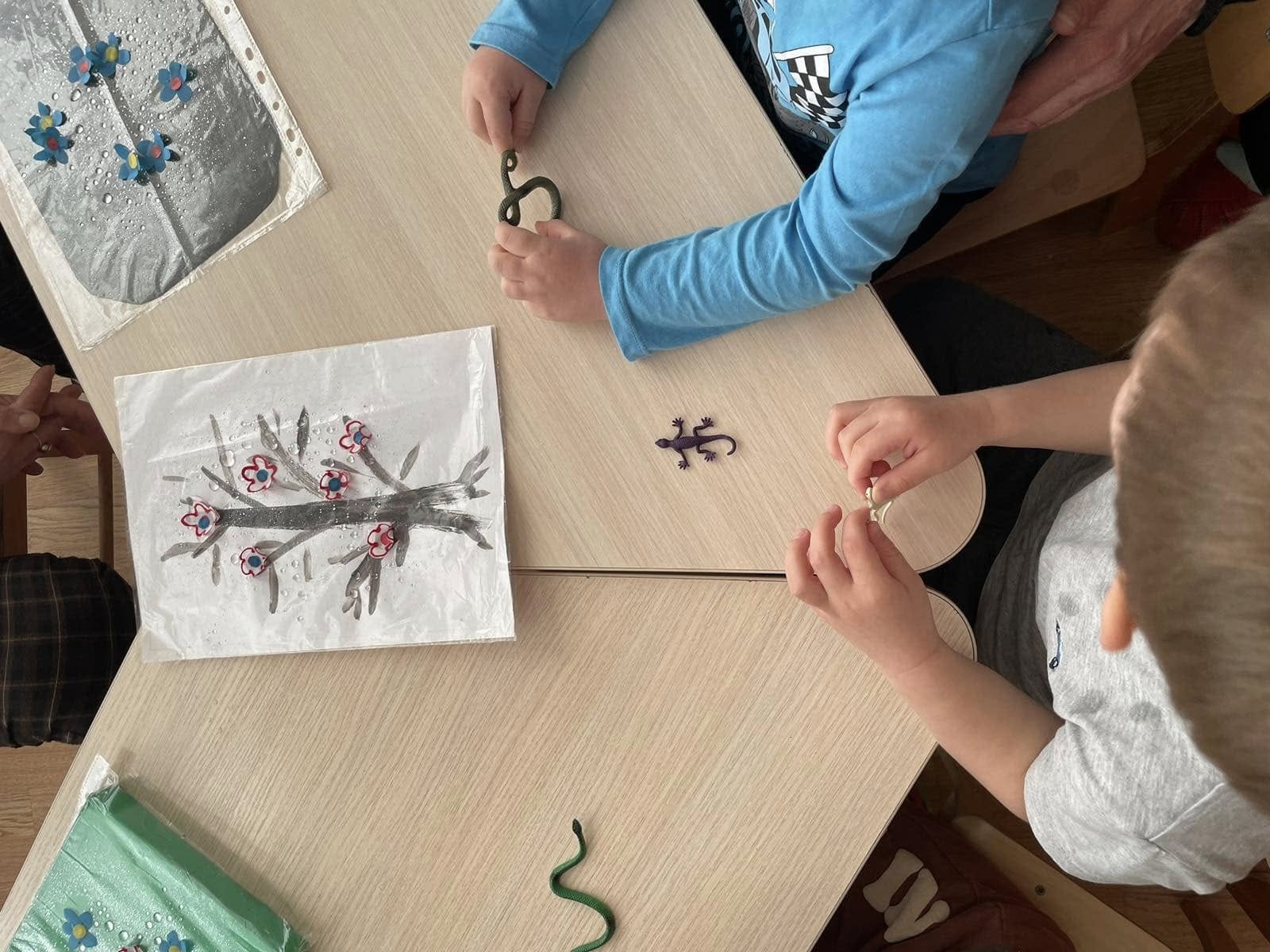
And what’s important is that when a child becomes more independent, they also become calmer. This is not about becoming “detached.” On the contrary — they begin to understand what is expected of them and feel that they are capable of doing it. They experience success, and contact appears between them and the adult who is teaching them. Gradually, motivation to receive new information emerges. Because when parents first bring their children to us, motivation is zero, imitation is zero. It’s as if the children don’t see the point in repeating things, don’t understand why they should make an effort. But when the process of independence is built, when the child experiences their first “I did it,” everything else starts to interest them. A desire appears to try new things, to listen, to explore.
And that is exactly what parents are paying for — for systematic, complex, exhausting, but incredibly effective work that gives their children something that changes their entire lives: the ability to be independent, calm, motivated, and open to development.
There was also a question about the kindergarten’s anniversary…
Yes, I got a bit carried away — sorry, it’s a sensitive topic. So, speaking about the anniversary, we really have been working day in and day out for a full 15 years now, if we don’t count the forced three-month break after February 24, 2022. Over all this time, about a thousand children have graduated from our kindergarten, and the oldest of them are now 20–22 years old — fully grown adults already. Time truly flies.
And you know what? We very rarely have open spots. For us, this is one of the greatest achievements. Because when people know that by coming to us their child will truly be taught, not just cared for in a place of attendance, this is the most valuable confirmation that we are doing everything right. Our team, whom I deeply love and appreciate, puts in tremendous effort, works honestly, and is always focused on results. We are interested in long-term work with a child. Because ASD is a lifelong story, and our role is to be the support that helps a child go through all stages of development smoothly and consistently, without sudden jumps or setbacks. And when parents see real changes, when they know their child is moving forward, that is the greatest reward for the team.
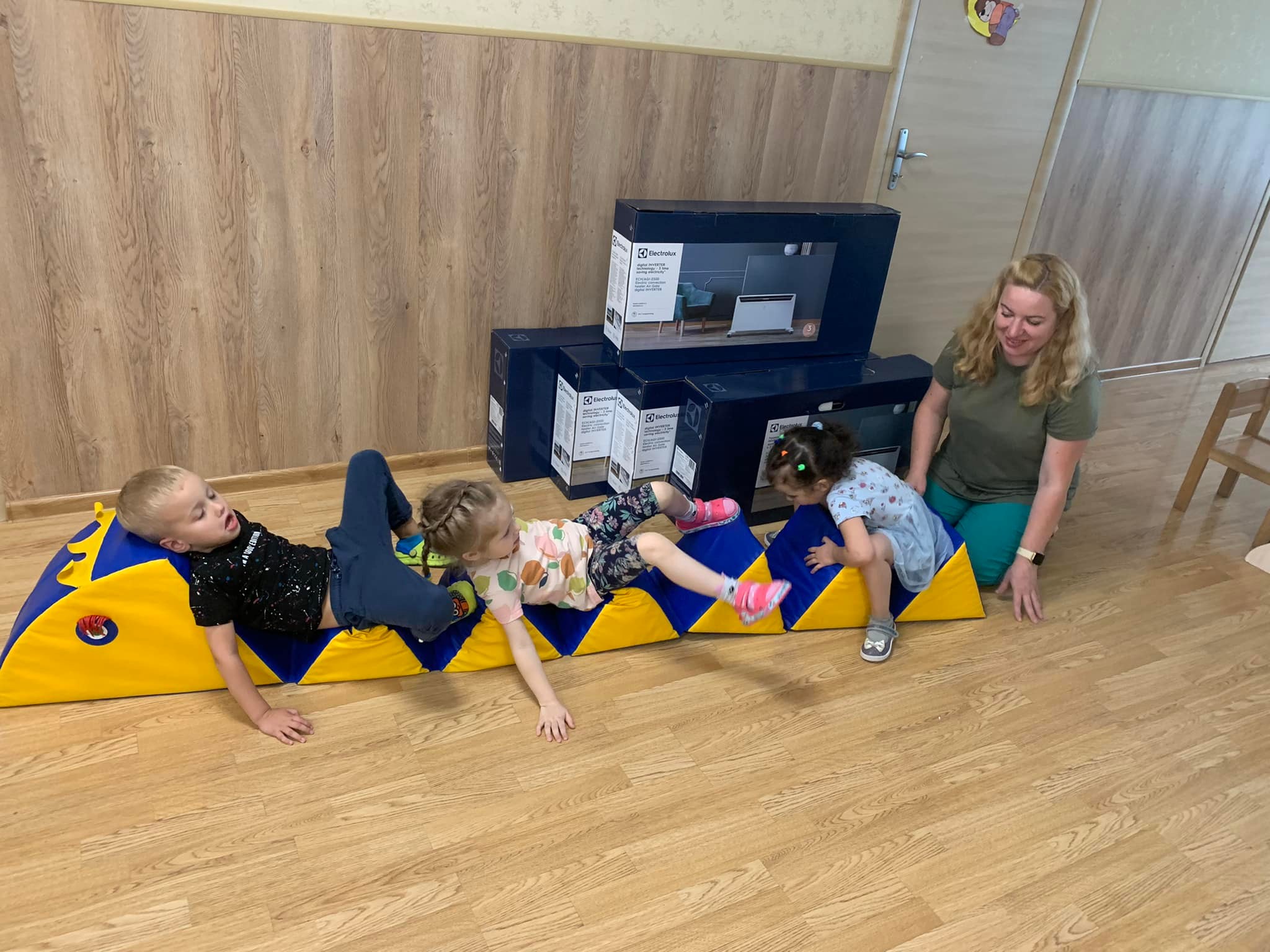
Our credo is simple yet very deep: to make children independent and to use the full potential that each child has inside. Because we never know what level a child is capable of reaching. There is only one thing we can do — put in the maximum effort for every single child, without exception. And that is why I consider it a great achievement that our team has managed to create a system that works in a truly comprehensive way. We combine different approaches, different specialists, different methods — and together this gives the result that parents can see. This is more than just the work of a kindergarten. It is proof that with the right approach, faith, and persistence, it is possible to change the lives of children and families. And I am proud that we were able to build such a system and sustain it for so many years in a row. And all of this has been made possible thanks to the persistent daily work of the outstanding specialists of our kindergarten, whom I am incredibly proud of. Thank you!
I join you in that. All right, Ms. Natalia, to conclude, I would like to hear your expert opinion on the current needs in the system of early development and support for children with special needs in Ukraine. Where is the line between the responsibility of parents and that of the state?
In any case, parents’ responsibility will always be greater. No matter how much we might want to shift part of the burden onto the system, it is still the parents who stand next to the child every day, and so much depends on their understanding, involvement, and consistency. At the same time, I very much wish that what the state is implementing would finally become something that truly works, rather than just a nice idea on paper.
Unfortunately, we can all see this clearly in the example of inclusion. There is a lot of talk about it; it is presented to society as a wonderful, modern approach. But as soon as you dive into the real situation in educational institutions, a huge number of questions arise. Because between how it is supposed to work and how it actually works in reality, there is an enormous gap. And the most painful part is that very often these innovations are created by people who have no connection to practice at all. They have never worked with children in a group, never done correctional work, never seen real needs and real challenges. And that is exactly why this dissonance appears — ideas don’t work, don’t take root, and don’t stand up to the test of reality.
Let’s imagine a classroom where there is a child with visual impairment, a child with ASD, and a child with cerebral palsy. These children physically cannot learn under the same program, because each of them needs a separate approach and its own methodology. This is not a whim — it is a necessity. But for now, the system pretends that all of this can somehow be “averaged out.” We also already need to talk about tutors as a norm, as an integral part of the educational process. But they simply don’t exist — because there are not even graduates with the appropriate specialization yet. This creates a paradox: the requirement exists, but the people who can fulfill it do not. And this should not be the case. So the line of responsibility looks like this: parents must be involved, conscious, and active in their child’s development, but the state must create real, functioning mechanisms — not an imitation. Because without this, the system of early development and support for children with special needs simply cannot move forward.
And at the end of our conversation, on behalf of myself personally and our entire team, I would like to congratulate everyone on the new year 2026. I wish for the fastest Victory, health and success for our children, inspiration and patience for their parents, bright days and quiet nights. May this year bring peace, well-being, happiness, and many, many small victories for your children to every Ukrainian family!